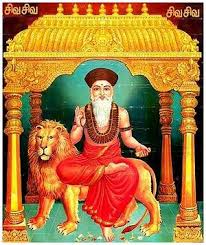
Today is Thai Poosam, the full moon day of the Tamil month ‘Thai’. This day is special to Bhagwān Shanmukhā (Kārtikeyā). So I have chosen to narrate the story of a scholar-saint who gained name and fame due to the abundant shower of blessings of Kārtikeyā.
Kumaran, was born in 1625 CE to Shanmuga Sikhāmani Kavirāyar and Sivakāmi Ammāl at a place called Srivaikuntam. This place is on the northern banks of the river Tāmraparani and is situated about thirty kilometres from Tiruchendur, one of the six sacred abodes of Bhagwan Shanmukhā. Kavirāyar and his wife had longed for a child for many many years and this child was a gift from their Ishta Devatā Kārtikeyā. Hence he was named Kumaran.
Though the child was very healthy and active, he remained mute till he was five years of age. This was of extreme concern to the parents. They prayed to Bhagwān Shanmukhā and decided to go and offer prayers at Tiruchendur, staying there for forty-five days.
At Tiruchendur the temple is on the sea-shore. Every day after bathing in the sea, the couple, with Kumaran would, for the whole day, pray fervently to Shanmukhā, to grant the power of speech to their son, retiring only for the night.
Forty-four days passed and there was no sign of the boy starting to speak. Kumaran’s parents were tremendously stressed out and could hardly get any sleep at night. On the forty-fifth night, the Lord appeared only to Kumaran in his dream. He called out to him, “Kumarā! Guruparā! Get up and come to me!” Kumaran dreamt that he got up and went to the Lord who then wrote on Kumaran’s tongue with his spear, the Vel.
Kumaran woke up from his sleep and much to the delight of his parents started singing the “Kandar Kali Venbā”. This is a short version of the Skanda Purana consisting of 244 verses describing right from the birth of Shanmukhā to His leading the army of Devas to victory against Tarakāsura, Soorapadman and his brothers.
The parents and others present were awed by this miraculous happening. Thrilled and extremely grateful to Lord Shanmukhā and returned to their home. Kumaran now came to be known as Kumaraguruparan (after how the Lord addressed him in his dream)
Kumaraguruparan started his studies under his learned father and became a Tamil scholar, well-versed in literature, grammar and Shāstrās. He composed the ‘Kailasa Kalambakam” dedicated to Shri Kailasanathā whose temple was in Srivaikuntam, where he lived. Gradually he started feeling the need of a spiritual Guru.
With the permission of his parents, he visited many places to find his Guru. He went first to Tiruchendur, to the same Shanmukhā who had enabled his faculty of speech. There he heard a divine voice. “In whose presence your speech falters and you fumble for words, he alone would be your Guru!”. Taking this guidance, Kumaraguruparar then proceeded to various cities, Tirunelveli, Kutrālam, Tiruvādānai and then to the city of Madurai – where the great King Tirumalai Nāyakka was ruling. He was welcomed by the scholars in Madurai and he stayed in one of the ‘Matams’.
That night, King Tirumalai Nāyakka had a dream. Meenakshi Amman, the Queen deity of Madurai appeared in his dream. “Kumaraguruparan is in town. Invite him to My temple and ask him to sing on Me” said She. The king woke up and enquired about Kumaraguruparan and found where he was staying. He went with his ministers and offered his respects to him and citing his dream, invited him to the Meenakshi Temple, where according to Meenakshi Amman’s wishes, Kumaraguruparar could sing on Her.
Kumaragururparar went to the temple where a ‘Sabha’ had been arranged for him. He composed and started singing the ‘Meenakshi Amman Pillai Thamizh’.
“Pillai Thamizh” is a minor literary genre in Tamil literature. In this format, the God, Goddess, King or Patron in whose honour it is being sung, is imagined to be a child and the beauty of the child in its various stages of growth is sung. Generally, the stages between the third and twenty-first months of the child are described.
The presentation of the “Pillai Thamizh” started and as it proceeded midway, a beautiful little girl-child aged about three to four years came from somewhere and rightfully sat on the king Tirumalai Nāyakka’s lap. Kumaraguruparar thought it was the King’s grand-daughter and the king thought it was the temple priest’s daughter. The child listened intently and at one point, removed a valuable pearl chain from the king’s neck and put it around the neck of Kumaraguruparar. As the king and others looked shocked, the child quickly went to the sanctum sanctorum and vanished! It was Devi Meenakshi who had listened to the songs in person and conveyed her appreciation.
Tirumalai Nāyakka was overwhelmed at this happening. He showered lot of honours and gifts on Kumaraguruparar and requested him to stay on for some more time at Madurai. Kumaraguruparar agreed and then composed the “Meenakshi Rettai Mani Malai”. The king also requested him to sing on Lord Sundareswara. Kumaraguruparar obliged and sang the “Madurai Kalambakam”. He also composed a group of 102 verses by the name “Needhi Neri Vilakkam”. This work basically explains the transient nature of youth, wealth and the human body. It is a guide to live a meaningful life listing the do’s and don’ts.
Kumaraguruparar then went on a Yātrā to Kshetrās in the Chola Nādu. He reached Tiruvārur and worshipping Shri Tyagaraja there he composed a poem ‘Tiruvārur Nānmani Mālai’. While staying at Tiruvārur, his yearning to find a spiritual Guru became very intense.
On hearing about the greatness of the 4th Guru of the Dharmapuram Ādheenam Shri Māsilāmani Desigar, he went to meet him. When the Guru asked him some questions, the eloquent Kumaraguruparar’s speech stuttered as he fumbled for words while answering one particular question. Realising through this indication (earlier indicated by Bhagwan Shanmukhā) he realized that this great person would be his Guru. He requested Māsilāmani Desigar to accept him as his student.
The Guru told him to go on a Teertha Yātra to important pilgrim centres including Kāshi and come back. Kumaraguruparar was overawed at the thought of undertaking this arduous journey. The Guru then told him to alternatively go and stay at Chidambaram for 45 days. His intention was to test if Kumaraguruparar had the maturity to be initiated into ‘Sanyāsa’ and accept him as his student.
Kumaraguruparar started for Chidambaram. On the way he stayed at Vaitheeswaran Koil where Bhagwān Shanmukhā came in his dream and commanded him to sing on Him after which he sang the “Muthukumāraswāmy Pillai Thamizh”. He reached Chidambaram and stayed there soaking in the bliss of Shri Nataraja’s darshan. He composed the “Chidambara Mummanikkōvai”.
Mummanikkōvai is a form of literature where three types of poetic meters are used. The Deekshitars of the Chidambaram temple were greatly pleased with Kumaraguruparar and requested him to sing more on Shri Nataraja. In response he sang the “Chidambara Seyyutkōvai”.
After the stipulated time, he once again went back to Māsilāmani Desigar with a request to accept him as his disciple. The Guru agreed and granted him the “Kāshāya Vastra” (saffron robe) and accepted him as his student. He now came to be known as Kumaragurupara Swāmigal. He sang the “Pandāra Mummanikkōvai”. In this work, apart from praising his Guru, Swāmigal brought out the philosophy of Saiva Siddhanta and the necessity of a Guru in one’s spiritual journey.
After spending some years with his Guru he was ready to go to Kashi (Benares). He reached Kashi and wanted to establish a ‘Matam’ to serve humanity and also build a temple for Bhagwān Shiva. It was the time when the Mughal rule was on. It is said that Swāmigal went to Delhi and met Prince Dāra Shukoh, (some say it was Aurangazeb) the Mughal prince who was the elder brother of Aurangzeb to ask for land in Kashi for his proposed ‘Matam’. Dāra Shukoh was an unorthodox Muslim who was open to other faiths and listened to scholars of other faiths. When Kumaraguruparar went there, he could not communicate properly with the Prince as language was a barrier. He came back to his staying place and composed the ‘Sakalakalāvalli Mālai’ in praise of Vāk Devi Saraswathi and prayed to Her and lo and behold! He gained mastery over Hindustāni overnight. He spoke like a seasoned orator in Hindustani on the next day in court much to the surprise of Dāra Shukoh and his courtiers. The land was granted at Kedār Ghat at Kāshi.
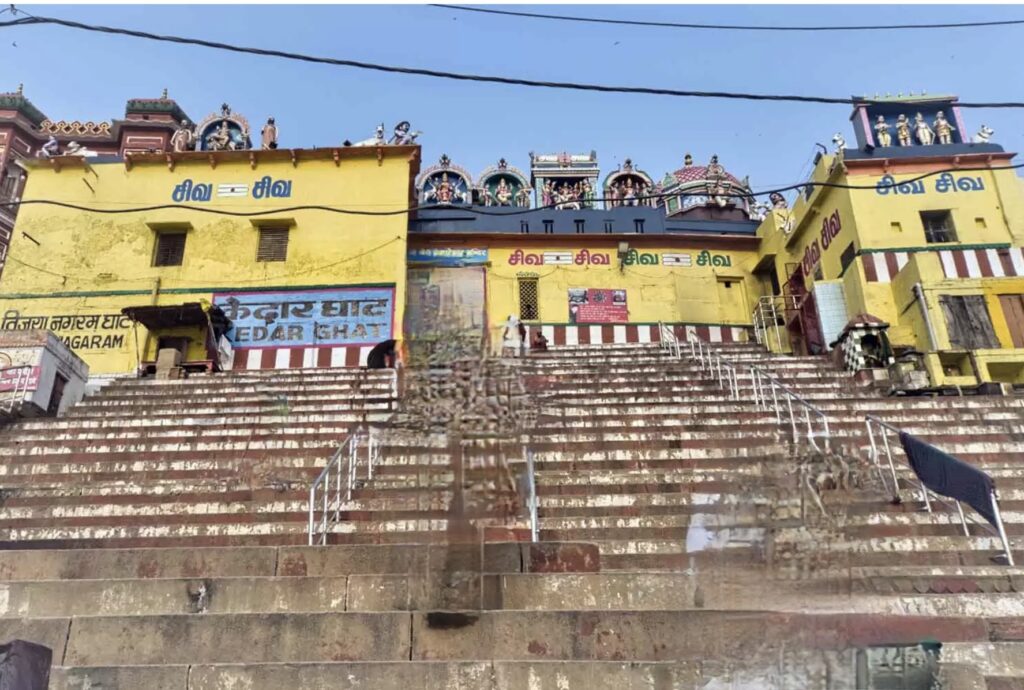
Kumaragurupara Swāmigal is said to have retrieved the ‘Lingam’ of Shri Kedāreshwar which had been hidden due to the invasions, and renovated the temple there and started a ‘Matam’ to do service from there. The temple is there till date for us to see which you can see in the picture.
Once again, Swāmigal came to Dharmapuram to see his Guru and then went back to Kashi for good. He attained Samādhi on the third day of waning moon in the Tamil month of Vaikāsi (May – June) in 1688 CE.
The sixth successor of Kumaragurupara Swāmigal established a ‘Matam’ at the place called Tiruppanandāl near Kumbakonam in the early eighteenth century establishing a connect between Kashi and Tamilnādu. This ‘Matam’ known by the name ‘Kāsi Matam’ continues till date with the Āchāryās staying both at Kashi and Tiruppanandāl. It does commendable service in the field of propagating Tamil language, education, healthcare, renovation of temples, cow protection, providing food and water to the needy, providing assistance to pilgrims going to Kashi, propagation of Saiva Siddhanta, publication of Tirukkural and Thirumurais and many more.
May we be all blessed by Shri Kumaragurupara Swāmigal!!!
R. Latha
very well narrated vidhya. interesting to read and came to know about kumaraguruparaswamigal and his works.
krvidhyaa
Thank you Latha!
Sripriya Ramesh
Pramadham Vidhya. I have read about Madurai incident n Dara Sukoh’s. But not all what you have beautifully written about Swamigal. Thanks much. Your lucid writing enlightening us is a blessing for all of us. Congratulations Vidhya.
krvidhyaa
Thank you Sripriya!!
Vidya @ Manomayi
Excellent narration dear Vidhya! Congratulations! God bless you! 🙏♥️🤝🕉️
krvidhyaa
Thank you Vidya!!
Gomathi S
Very informative and interesting narration about saint Kumaraguruparar.
Thank you Vidhya.
krvidhyaa
Thank you Goma!
Ushapadmini V
very nice to know so many details about kumara gurupara swamigal,Thanks madam
krvidhyaa
Thank you Ushapadmini ji!
Ram Mohan Narasimhan
Extremely detailed and very well researched. Nicely narrated
krvidhyaa
Thank you Ram Mohan!
Karthikeyan C
Excellent Narration. Thank you for the information I have been searching for
krvidhyaa
Thank you Kartikeyan ji!